Foreign Secretary Liz Truss has said the UK must accelerate NATO's
modernisation and deepen cooperation on tech and cyber, with a view to
ending the "strategic dependence on authoritarian regimes for our energy
and for other vital resources."
She added that Russian President
Vladimir Putin had been “surprised” by the “toughness” of sanctions
levelled against his regime.
Speaking at a press conference with
US Secretary of State, Antony Blinken, in Washington, she said: “Putin’s
illegal invasion of Ukraine is causing immense pain and suffering. Yet
he is not making the progress he planned.
“Since the build-up on
the border, the United Kingdom and the United States have led work in
the G7 and through Nato to challenge Putin’s aggression.
“Before
the invasion, the United States and the UK called out his playbook of
false flags, attempts to install a puppet regime in Kyiv, of fake
provocations. We worked with our G7 allies to warn that he would face
severe costs and a determined Ukrainian people.
“We have surprised
Putin with our unity and the toughness of our sanctions, hitting the
banks, the ships, the planes, the oligarchs, and the oil and gas
revenues. And the brave Ukrainian people have surprised him with their
determination and their leadership.
“Now is not the time to let up. Putin must fail.”
Editor's note: Fine rhetoric from Ms Truss but it would have been more credible if she had mentioned where the thinks to oil needed to fuel the UK economy might be sources if not from tyrannical regimes like Russia, Saudi Arabia, United Arab Emirates, Venezuela, Syria and other oil producing nations with regimes that fall a long way short of being squeaky clean.
RELATED
Europe's Depleted Gas Storage Might Not Get Refilled Ahead Of Next Winter While mainstream news reporting of the conflict in Ukraine continues to pump out a torrent of anri - Russia, pro - war propaganda the catastropic effects of this war that could so easily have been avoided are not mentioned. Well why would warmongering governments admit they have inflicted an energy crisis, food shortages and soaring living costs on their people for no good reason ...
We Told You So - Government-funded Report Confirms World’s Largest offshore Wind Farm is UnprofitableA report commissioned by the Norwegian government has contradicted Boris Johnson’s recent claim that offshore wind costs have fallen by 70% in a decade. The report also blows a huge hole in Johnson's grandiose pledges to the COP26 conference that offshore wind power would propel Britain to its net - zero target for Carbon Dioxide emissions well before 2050, the target set by the climate conference for achieving that target. Continue reading >>>
COP26 Climate Conference - Just Another Elitist Scam To Steal Your Money If you are one of the people who still relies on mainstream media for information, the 'on - message' news reports coming from the COP26 Climate Conference in Glasgow this week, and during the build up to the conference, might have convinced you that the entire world (barring a few crazy conspiacy theorists,) is signed up to the 'net zero' agenda and believes that destroying the economies of the developed nations while exporting our jobs, business and prosperity to places like India and China is the only way to save the planet.
Continue reading >>>
Green Dreams Menu It may be driven by virtue signalling or self hatred but the urge to destroy civilisation in order to save the planet and the ideological agenda that drive the gree movement are too far removed from the realities of life to ever achieve their aims.
Green Dreams Menu It may be driven by virtue signalling or self hatred but the urge to destroy civilisation in order to save the planet and the ideological agenda that drive the gree movement are too far removed from the realities of life to ever achieve their aims.
Ireland Set To Become The First Country To Totally Abandon Fossil Fuels
The Irish have a reputation for stupidity. They are, taken as a whole, no more stupid than the English, French, Germans or any other nation, I’ve known many Irish people who are highly intelligent and very well educated. My wife is Anglo – Irish, born in England to Irish parents, so I sleep next to an intelligent Irish person. But collectively the Irish do have a penchant for making incredibly bad decisions ... Continue reading
Across the world solar energy share prices have crashed. This was caused by a sudden and unexpected decision by China, the world’s biggest solar manufacturer and user, to rein in subsidies. According to Caixin Global:
China has abruptly put the brakes on solar power subsidies, seeking to stem overcapacity in a sector that has benefited for years from government incentives.
Germany, not so long ago at the politically correct centre of the world, championing the cause of free immigration and the move to clean, green, sustainable energy (two policies guaranteed to leadt to the desruction of European civilisation, is suffering a crisis of arrogance as German society descends into chaos due to the actions lawless … Continue reading
Driving
home from the gym Tuesday night, I saw a billboard demanding a no-fly
zone over Ukraine. This, it turns out, is now a super-majority position
in America, according to a recent poll, despite the near certainty that this would lead to World War III. Another example of manufactured consent at work.
One
of the ways the discourse about the Ukraine war is policed is by
claiming that someone who mentions NATO expansion as one of the causes
of the current conflict is a "Putin apologist". Oxford-trained British
researcher Noah Carl wrote a piece refuting this lazy ad hominem charge.
I have posted it in full below. Before that, a quick update on our
system's top names, in light of the Ukraine crisis.
Ukraine Crisis Rewards Oil Exposure
In my previous post (Ukraine
Is Trying To Goad The U.S. Into World War III), I mentioned that our
top ten securities on Monday included five oil names. Our system's
gauges of stock and options market sentiment started picking up oil
names well before Russia's invasion of Ukraine though. For example,
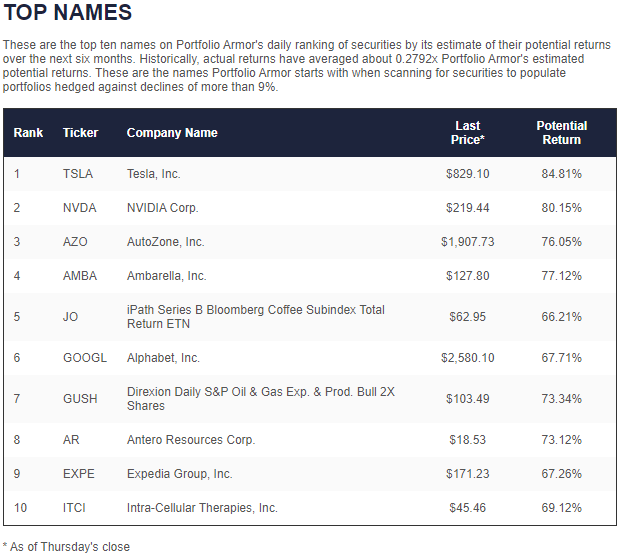
these were our top ten names on January 27th. As you can see, they
included the Direxion Daily S&P Oil & Gas Exp. & Prod. Bull
2x Shares ETF (GUSH) along with the oil E&P Antero Resources (AR).
Here's
how they've done since: up 6.31%, on average, versus down 3.48% for
SPY, with pretty much all of our gains coming from the two oil names
plus the biotech stock Intra-Cellular Therapies (ITCI).
Mentioning NATO does not make you a "Putin apologist"
If
you venture to suggest that NATO expansion has anything to do with
Russia’s invasion of Ukraine, you will be promptly informed that you’re a
“Putin apologist” or that you’re peddling “pro-Putin talking points”
(or some variation on this theme). The argument seems to be that, by
suggesting Putin’s invasion was motivated – even in part – by anything
other than bellicose revanchism, you’re absolving him of responsibility
and even undermining the war effort. However, aside from being a blatant
ad-hominem (most people, though not all, consider “Putin apologism” to
be a bad thing), this argument is deficient on three counts.
First, foreign policy analysts have been pointing out the risks of NATO expansion since before Putin
came to power. It’s therefore very difficult to see how they could have
been engaging in “Putin apologism”, unless they are somehow capable of
time travel. Vladimir Putin become Prime Minister of Russia in 1999,
before succeeding to the Presidency the following year. Yet as far back
as 1997, Jack Matlock – US ambassador to the Soviet Union – said the following in a Congressional statement:
I
consider the administration’s recommendation to take new members into
NATO at this time misguided. If it should be approved by the United
States Senate, it may well go down in history as the most profound
strategic blunder made since the end of the Cold War. Far from improving
the security of the United States, its Allies, and the nations that
wish to enter the Alliance, it could well encourage a chain of events
that could produce the most serious security threat to this nation since
the Soviet Union collapsed.
Bill Clinton’s Defence Secretary William Perry wrote in his book My Journey at the Nuclear Brink that
he was so opposed to NATO enlargement in 1996 that he “considered
resigning”, and that he is “not willing to concede” that the “rupture in
relations with Russia would have occurred anyway”. In 1998, George
Kennan – who’s been described as the “architect” of the US containment policy during the Cold War – told the journalist Thomas Friedman:
I
think it is the beginning of a new cold war. I think the Russians will
gradually react quite adversely and it will affect their policies. I
think it is a tragic mistake. There was no reason for this whatsoever.
No one was threatening anybody else. This expansion would make the
Founding Fathers of this country turn over in their graves.
Second,
many of those who’ve expressed reservations about NATO enlargement
don’t exactly fit the mould of a “Putin apologist”. I’ve already named
three – two former US ambassadors and a former defence secretary. But
there are plenty of others who can scarcely be accused of having
pro-Putin sympathies: former Australian Prime Minister Malcom Fraser;
former US Defence Secretary Robert Gates; former British ambassador to
Russia Sir Roderic Lyne; and current CIA Director William Burns. They’re
all in this excellent thread by Arnaud Bertrand. Even Joe Bidenwarned about NATO admitting the Baltic states in 1997.
If
a former US ambassador (and a patriot to boot) can describe NATO
enlargement as something that “would make the Founding Fathers of this
country turn over in their graves”, it is surely possible for others to
reach similar conclusions without being stooges of the Kremlin. Now I’m
sure there are some genuine “Putin apologists” in the West, and
they may well go around blaming NATO for the present crisis. But to
conclude that everyone who blames NATO is therefore engaged in “Putin apologism” would be an example of the “Hitler used toilet paper” fallacy. (“Oh, you use toilet paper? So did Hitler!”)
Third, there’s a lot of evidence that NATO enlargement was a
factor – arguably the most important factor – in Putin’s decision to
invade. This evidence is by no means dispositive; isolating the causes
of particular historical events is notoriously tricky. But I believe
it’s possible to defend statements such as, “If the West had ruled
out NATO membership for Ukraine, Putin would not have invaded”. Having
said that, I’m willing to be convinced that I’m wrong. Some people claim
that Putin always had designs on Ukraine, and would have invaded regardless of our policy; or perhaps that the only thing that would have stopped him is Ukraine joining NATO even sooner! If so, let them make their arguments without calling those of us who disagree “Putin apologists”.
So, what’s the evidence that NATO enlargement set the stage for Russia’s invasion? Much of it’s laid out in a 2014 article by
John Mearsheimer titled ‘Why the Ukraine Crisis Is the West’s Fault’.
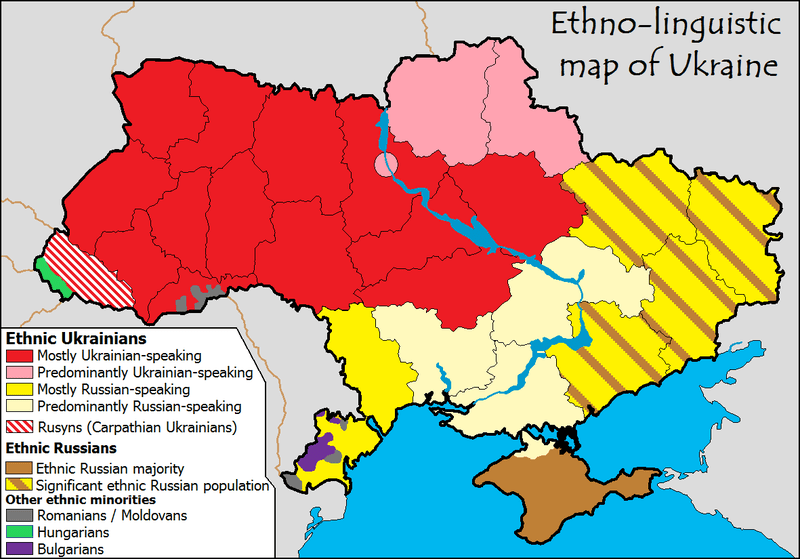
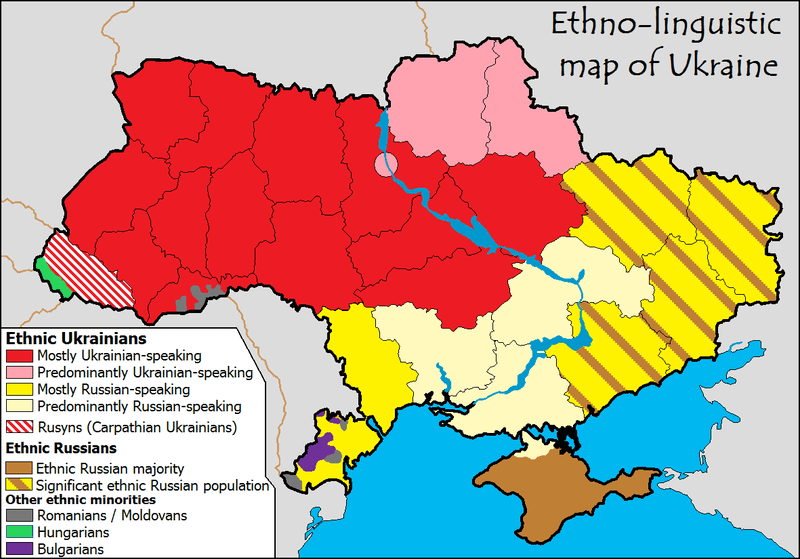
I’ll do my best to summarise. Ukraine has always been an ethnically
divided country, with mostly Ukrainian speakers in the North West, and
mostly Russian speakers in the South East (see above). Prior to February
of 2014, about 50% of Ukrainians favoured one party, and about 50%
favoured another. The map below shows results from the 2010 election. As
you can see, there’s an extremely strong relationship between ethnicity
and voting.
Viktor Yanukovych, whose party was favoured in the Russian-speaking parts of the country, happened to win the
2010 election. So in 2010, Ukraine had a democratically elected (albeit
massively corrupt) pro-Russian President. The trouble started in
November 2013, when his government decided not to ratify an association
agreement with the EU so that it could pursue closer economic ties with
Russia. This gave rise to the Western-backed Euromaidan protests, and
the eventual toppling of Yanukovych. Which in turn led to the outbreak
of the war in Donbass and Russia’s annexation of Crimea.
It would be fair to say that, prior to the toppling of Yanukovych, both the West and Russia had been meddling in Ukrainian affairs – each trying to steer the country in its own direction. After this
event, however, the country veered sharply away from Russia. (This was
partly due to the fact that Crimea and the Donbass – the two most
pro-Russian areas – had been removed from the electoral map.)
Petro Poroshenko, the man who replaced Yanukovych, announced that “we’ve decided to return to the course of NATO integration”. NATO troops began military exercises in Ukraine later that year. Then in 2019, the Constitution was amended to include joining NATO as a strategic goal. By June of 2020, Ukraine was recognised by
NATO as an “Enhanced Opportunities Partner”. And in November of 2021,
the US and Ukraine signed a “Charter on Strategic Partnership”, which declared that
the US “supports Ukraine’s right to decide its own future foreign
policy course free from outside interference, including with respect to
Ukraine’s aspirations to join NATO”.
At the same as it was making overtures to joining NATO, the government began implementing pro-nationalist policies. The day after the toppling of Yanukovych, parliament voted to
repeal a 2012 law that gave Russian and other minority languages the
status of “regional languages” (allowing their use in courts, schools
and other public institutions). This decision was initially vetoed by
the acting President. However, the law was later ruled unconstitutional
by Ukraine’s Constitutional Court. Efforts to promote Ukrainian
nationalism were stepped up further under Volodymyr Zelenskyy, who
assumed the Presidency in 2019. He banned pro-Russian media, and arrested the
opposition leader – a gentleman named Viktor Medvedchuk, who happens to
be a personal friend of Putin. (Medvedchuk stands accused of treason.)
Russian
leaders have long viewed Ukraine as what Mearsheimer calls a “core
strategic interest”. And they have repeatedly made this clear to their
counterparts in Washington. Back in 1995, when CIA Director William
Burns was working at the US embassy in Moscow, he wrote a memo stating,
“Hostility to early NATO expansion is almost universally felt across
the domestic political spectrum here.” And in a later memo, sent to the
US Secretary of State before NATO’s 2008 Bucharest Summit, Burns wrote:
Ukrainian
entry into NATO is the brightest of all red lines for the Russian elite
(not just Putin). In more than two and a half years of conversations
with key Russian players, from knuckle-draggers in the dark recesses of
the Kremlin to Putin’s sharpest liberal critics, I have yet to find
anyone who views Ukraine in NATO as anything other than a direct
challenge to Russian interests.
The memo was titled ‘Nyet
means nyet: Russia’s NATO enlargement red lines’. Burns had previously
been called in by the Foreign Minister Sergey Lavrov, and reminded of
Russia’s long-standing opposition to NATO membership for Ukraine. Lavrov
told Burns that “the issue could potentially split the country in two,
leading to violence or even, some claim, civil war, which would force
Russia to decide whether to intervene.” In spite of all this, NATO
members at the Bucharest Summit formally agreed that Ukraine and Georgia “will become members of NATO”.
Russian
opposition to NATO membership for Ukraine is particularly strong due to
feelings of betrayal over earlier rounds of NATO expansion, which they
had been assured by the US would not happen. While some commentators dispute the
US ever promised Russia that NATO wouldn’t expand into Eastern Europe,
the political scientist Joshua Shifrinson – who has studied the issue in
greater detail than anyone else – comes to different conclusions. In a
prize-wining 2016 article (with 185 footnotes), he notes that
during
the diplomacy surrounding German reunification in 1990, the United
States repeatedly offered the Soviet Union informal assurances against
NATO’s future expansion into Eastern Europe. In addition to explicit
discussion of a NATO non-expansion pledge in February 1990, assurances
against NATO enlargement were epitomized and encapsulated in later
offers to give East Germany special military status in NATO, to
construct and integrate the Soviet Union into new European security
institutions, and to generally recognize Soviet interests in Eastern
Europe.
Shifrinson further states, “There are
numerous reasons to condemn Russian behavior in Georgia and Ukraine, as
well as against states in Eastern Europe, but Russia’s leaders may be
telling the truth when they claim that Russian actions are driven by
mistrust.” This surely helps to explain some
of Putin’s remarks in his February 22nd speech, such as when he claimed
“they have deceived us” and when he referred to the US as the “empire
of lies”.
Of course, there are important cultural and geographic reasons why Russian leaders regard Ukraine as a “core strategic interest”. The cultural reasons are laid out in Putin’s rambling 2015 essay ‘On
the Historical Unity of Russians and Ukrainians’ – which you can read
for yourself. (Note: I’m not saying Putin is correct; I realise that his
factual claims are heavily contested. I’m just saying that’s what he,
and probably most Russian nationalists, believe.) The geographic reasons
are more straightforward:
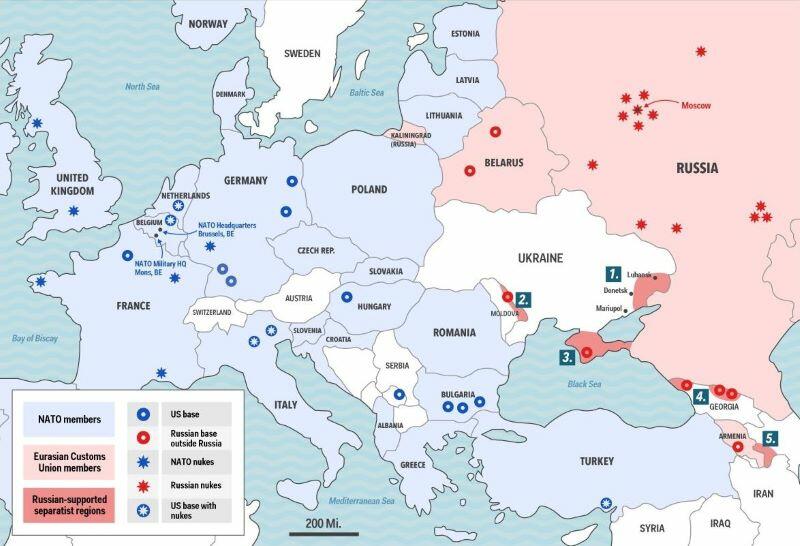
Ukraine’s vast territory provides a buffer-zone between NATO’s Western
Border and Russia’s major cities; and Russia requires access to its
Black Sea Fleet, which is based in the port of Sevastopol in Crimea (see
above).
Finally, it’s worth noting that Putin explicitlymentioned the
threat of NATO expansion as the motivation for his “special military
operation” in his February 22nd speech. In fact, he spends the entire
first half of the speech criticising US foreign policy vis-a-vis NATO,
and arguing that NATO is an aggressive not a defensive alliance. Of
course, we shouldn’t take what Putin says at face value. Perhaps he was
concealing the true motivations for his military aggression? But if
you’re going to make this argument, you can’t rely on other things Putin has said (like his 2015 essay), since you’ve already assumed that his words can’t be trusted.
Arguing that NATO enlargement was a key motivation for Russia’s invasion of Ukraine does not make
you a “Putin apologist”. Foreign policy analysts have been pointing to
the risks of NATO enlargement since before Putin came to power. And many
of those analysts were bona fide American patriots (ambassadors and
defence secretaries), not fringe commentators with an anti-Western axe
to grind. What’s more, there’s a lot of evidence that NATO enlargement was a
crucial factor in Putin’s decision-making: longstanding Russian policy
with respect to Ukraine; developments in that country since 2014; and
the content of Putin’s February 22nd speech.
Of course, none of this means we have to support Russia’s military aggression. So what’s the upshot? We should have followed John Mearsheimer’s advice in 2014: work with Russia to create a prosperous and neutral Ukraine,
which respects minority rights. Of course, that’s no longer possible,
as it’s 2022 and Russian artillery fire is raining down on Ukrainian
cities. But if we want to end this conflict sooner rather than later,
while minimising the risk of a devastating nuclear war, we should be
pushing for some kind of settlement that accepts Ukraine won’t be a member of NATO.
Removing Russia’s central bank and a number of commercial
banks from the SWIFT international payment messaging system was the shot heard around the world that signalled the start of World War 3. It represented the weaponisation of money in a way and on a scale never seen before.
The whole world has seen this. Never mind what African, South East Asian and South American nations will think when US or European nations want to do business with them via SWIFT. And
what will China think now?
They will make it a
priority to NOT need the US dollar going forward. Russia and China have already established an alternative cross border transactions system to by pass SWIFT and banks in over a hundred nations are signed up to it. So they were already well
on the path to de-dollarisation before the kerfuffle in Ukraine kicked off,. but expect this process to speed up now, particularly before the Chinese invade Taiwan.
It may sound dramatic,
but this is a turning point in monetary history. When the US left
American soldiers stranded in Afghanistan and rescinded all its promises
to Afghans, it effectively told the rest of the world that it couldn’t
be trusted as a military ally. The indeciviveness and vacillation of the Biden administration was like giant flag with the word weakness emblazoned on it.
However it has suddenly become fashionable to say what a few years ago would have been unthinkable, that the USA and NATO have brought all this shit down on themselves by repeatedly meddling in the internal politics of nations in all these far flung corners of the earth. There were always going to be consequences. Keep poking The Bear with a pointed stick and sooner or later it is going to get angry.
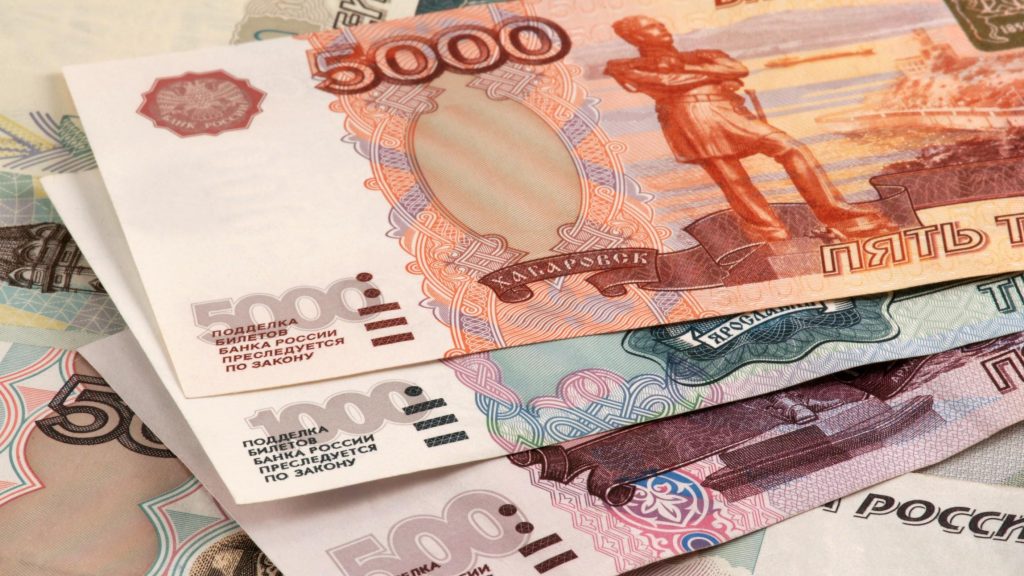
Russian Ruble
By canceling Russian banks and thus making life difficult for millions of Russian citizens and
businesses that need to move money around globally (via SWIFT) they just announced that
the US dominated, petrodollar based monetary system could not be trusted. Unless you play by
whatever rules the West wants you to play by you’re out, and your assets are frozen or confiscated so you cannot join another game.
Russia and China saw it coming, western leaders were warned (by Russia and China) that Russia and China had seen it coming but were too arrogant to heed the warning, in fact they were so deeply absorbed in their own pomposity they refused to believe Russia and China were capable of mounting a challenge.
Now that the west has used money as a weapon in this way it opens a gate to the end of USD hegemony and the acceleration towards a
bipolar monetary order. This gives the US Federal Reserve, The Bank of England, the European Central Bank (ECB) and other central banks a huge problem. Think it through.
China’s PBOC and Russia’s central bank all hold the debt of other central
and commercial banks in the form of bonds, and they will draw on those or call them in. That in
itself would reduce funding at those banks as swap lines would be
canceled (we had a precursor in 2008 to this) as it would involve
massive amounts of funding problems.
Sanctions began this process and now eliminating Russia from SWIFT will
accelerate it. Ironically the sanctions imposed by the US / NATO alliance on Russia were always going to hurt citizens of the USA and NATO member states more than their intended target. Millions have already been forced into fuel poverty, food shortages and energy supply problems are already being felt and we are only two weeks in. Russia has had sanctions
for years. They’ve built resistance to them. And they have prepared, developed strategies and put plans in place to avoid dependence on western capital in exactly the way western leaders have not avoided dependence on Russian energy, Russian fertilizer and Chinese manufacturing.
In
the political world. A world littered with sociopaths and thugs, Putin
is arguably the most experienced thug. In fact, if you listen to his
speech it was anything but the rantings of a mad man.
I’ve
half-written several pieces on the unfolding Ukraine crisis—mostly as I
see things through the lens of the information warfare business in the
West—but my posts on Twitter might
be the best place to get quick analysis on it, alongside everything
else. The effectiveness of writing think-pieces at all about
fast-developing stories is now an open question; the old TLDR (“Too
Long, Didn’t Read”) dynamic seems to’ve been replaced by, simply, DR.
Even
for Americans who, rightly, are opposed to US government involvement in
the conflict, the Ukraine issue is massive knot of nearly every
important concern: energy, economy, foreign policy, communications and
censorship, the end of American hegemony, the Deep State, the limits of
knowing, etc. All those intersections are fertile ground for pundits and
analysts and citizens to consider.
Most of all, I’ve been alarmed
at the predictable onslaught of one-sided propaganda and over-the-top
lies coming from Western outlets, and the totalizing moral panic that
discourages sober thought about the conflict. Putin’s Russia was
certainly the aggressor—but American media from Fox to CNN and NBC
supply an airbrushed narrative, a black-and-white morality tale. Not
only is the truth in this conflict a shade of gray—but the implications
are, as well.
Like BLM, Covid, and other the media and politicians
of both parties have locked arms around a consensus. Allegiance to the
the narrative must come before independent thought, which brings with it
the possibility of questioning that narrative. Dissenters—heck, even
questioners—have been shouted down and called, “traitors.”
The agitprop is so thick because Ukraine is ground zero for an
ecosystem of influence that, for about a decade, has been able to wield
tremendous consensus-making power within the American and western
foreign policy community. Influencing the public and policy debate on
Ukraine and Russia is precisely what this ecosystem was built to do.
Since
the collapse of the Soviet Union, Ukraine has been a cash machine for
western oligarchs. With a very low standard of living and rampant
corruption, the country was the perfect place for the very wealthy to
make a buck. Unlike Eastern Europe, which had gotten far more expensive
by then, Ukraine was a relative badland; pennies-on-the dollar
investments in Ukrainian business and infrastructure would produce a
windfall if the country moved towards NATO and the European Union.
In
2014, the western-backed Maiden uprising was a Color Revolution regime
change effort in order to ensure this glide-path toward NATO and the EU
would continue. But that’s only half the battle; the effort required the
commitment of American policymakers who would push it aggressively from
within the world’s most powerful government, as well.
Western
oligarchs invested in Ukraine funded a massive infrastructure of
information and influence operations I often refer to as the “NGO
Archipelago.”
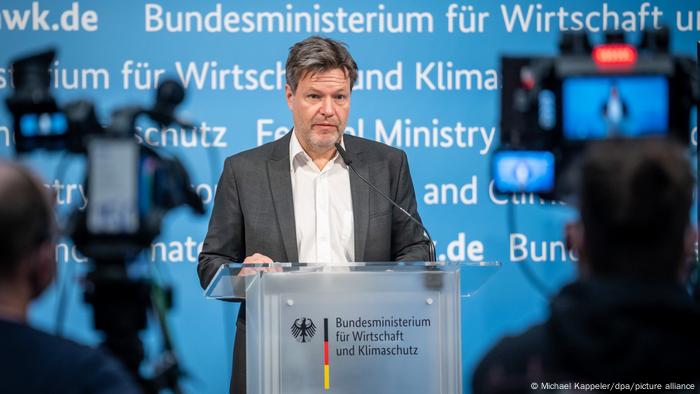
Germany's economy minister says he regrets the country
is still dependent on imports from Moscow, and that Europe's largest
economy is already feeling the impact of sanctions imposed over Russia's
invasion of Ukraine.
Habeck said Germany must free itself from imports of Russian energy
In
February, Germany stopped the controversial Nord Stream 2 natural gas
pipeline. It has since joined other European nations in introducing a
raft of sanctions against Russia over its invasion of Ukraine.
With his life on the line every day his country fights back against
Russian forces, Ukrainian President Volodymyr Zelenskyy is angry that
Western nations want to avoid alienating Russian leader Vladimir Putin
while also backing Ukraine.
NATO leaders on Friday said that establishing a no-fly zone over
Ukraine, as Zelenskyy has begged for, would be a step too far in putting
the West on Putin’s list of enemies.
On Saturday, Putin explicitly said that any country that stands with Ukraine to support it in the skies would be considered an enemy.
Zelenskyy said Ukrainians will die because of the temporizing and
half-measures of NATO members that fear Putin more than they support
freedom, according to Axios.
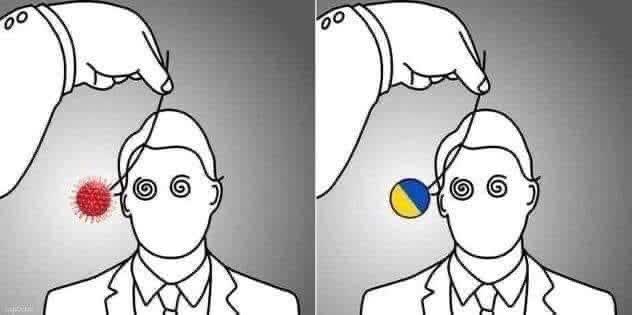
The “narrative” that supporting a no-fly zone leads directly to
Russian aggression on their own counties is the “self-hypnosis of those
who are weak, under-confident inside,” Zelenskyy said.
“All the people who will die starting from this day will also die
because of you, because of your weakness, because of your disunity,” he
continued.
Zelenskyy
sought to portray the need for a no-fly zone in the stark terms of
Ukrainian survival, saying the NATO summit was a “weak summit, confused
summit, summit which shows that not everyone considers the struggle for
freedom to be Europe’s number one goal.”
We are watching a slow-motion horror show unfold right in front of
our eyes, and nobody seems to have a way to stop it. The vast majority
of the global population did not want World War III to happen, but it
has started anyway.
For years I have been warning
that such a conflict would erupt if we did not change course, and now
here we are. I am very angry at Vladimir Putin for launching a
full-blown invasion of Ukraine because he didn’t need to do that. And I
am also very angry at the Biden administration, European leaders, and
Ukrainian President Volodymyr Zelensky for endless provoking the
Russians and for refusing to negotiate an agreement that could have
settled all of this peacefully. I blame both sides for the war because
in my opinion it could have been avoided so easily. But now that World
War III has begun, there will be no going back.
On Thursday, the head of the Russian Foreign Intelligence Service
made a statement that should be a major league wake-up call for all of
us.
According to Sergei Naryshkin, Russia is now engaged in a “hot war” with western powers…
Also on Thursday the head of the Russian Foreign
Intelligence Service (SVR), Sergei Naryshkin, issued a series of
bombshell statements which may reveal Moscow’s broader aims in the war
concerning how Russia’s sees its ultimate security aims. Naryshkin said
that “for us this is no longer a Cold War with the West but a hot war,” according to Interfax. He said in the rare statement that “Russia now has a real chance to put an end to the war that has been waged in the Post-Soviet space for the past 30 years” – as also quoted in TASS.
If that is how the Russians really view things, that is extremely sobering.
Because a “hot war” between two sides armed with nuclear weapons has the potential to spiral out of control very easily.
A Ukrainian MP has said the country feels “abandoned by the West” as
she condemned the response of the UK and US to the Russian invasion.
Inna
Sovsun, deputy leader of the Holos Party, said the rollout of sanctions
on Russia is not at “the same speed as the rollout of the atrocities of
the war”.
“Right now, there is this feeling of betrayal… and we do feel abandoned by the West,” the 37-year-old told the PA news agency.
“We
are extremely disappointed with both the UK government and the American
government… we were hoping for the sanctions to be more rapid and more
overwhelming.
“Not a single pound should be going into Russia
right now – they will be using that to buy weapons with which they will
continue to be killing Ukrainians.
“The rollout of sanctions isn’t
on the same speed as the rollout of the atrocities of the war that
(Vladimir) Putin launched against us.”
Ms Sovsun said this lack of action from the West meant she was
“angered” by a speech from US Secretary of State Antony Blinken in which
the politician said Ukrainians are “inspiring the world”.
“I’m
sorry but that just got me so angry, because I don’t want to be
inspiring, I want to be able to read a book to my son when putting him
to bed, who I haven’t seen for eight days,” Ms Sovsun said.
“We don’t want to be inspiring…. we don’t want to be the beacon of democracy – in Ukraine, we just want to stay alive.
“We want every single Russian kicked out of every single country that says they love Ukraine… and want to support us.
The West has responded to Russia’s invasion of Ukraine in three main ways: pouring arms into Ukraine to buttress the country’s defence; imposing heavy sanctions on Russia to cripple its economy; and essentially ‘cancelling’ Russia by shutting down its foreign media, censoring its cultural exports, and banning its athletes from international competitions.
The hope seems to be that either one of three things will happen: the Russians will be defeated or forced to withdraw; Putin will be overthrown in a palace coup or popular uprising; or he’ll be brought to the negotiating table and made to accept terms highly unfavourable to Russia. While this strategy may work, I’ve yet to read a cogent defence of it.
In fact, the strategy could have a number of negative second-order effects – i.e., unintended consequences – that haven’t been properly thought through.
As several people have observed, the West’s response seems to have been slapped together on the fly amidst a storm of social media outrage, as opposed to being carefully devised after consideration of all possible eventualities
Continue reading >>> Return to MENU
[Daily Stirrer] ... [ Our Page on on Substack ]... [Boggart Aboad] ... [ Greenteeth Home ] ... [ Greenteeth on Minds.com ] ... [ Latest Posts ]
The
US and EU are deluding themselves on the likely efectiveness of Russian sanctions. The end result could
be the de-dollarization of the global economy and massive commodity
shortages worldwide...
While
politicians and media in the western 'democracies' have been playing
"We the guys in white hats, they the guys in black hats over the
kerfuffle between Russian and Ukraine the real war is being fought on a
very different battlefield. BoJo and Biden the two circus clowns of the
western alliance can bluster all they want, the fact is while public
attention is diverted by propaganda form each side about the atrocities
of the other in Ukraine, in the battle being fought in financial and
commodity markets, Putin has the NATO alliance by the bollocks.
Prior
to the outbreak of hostilities Europe was in the throes of an energy
crisis due mainly to the folloy of green energy obsessions leading to
energy policies which entailed reliance on unreliable and intermittent
sources such as wind and solar farms, with the only fallback being
imported oil and natural gas from Russia. The USA, while not in as bad a
position as their European allies, are experiencing problems of their
own with rising energy costs driving millions of homes into poverty.
On
top of that, and a few days behind this blog it has to be said,
mainstream media seems to be catching on to the fact that Russia and
Ukraine are key suppliers of wheat, maize and food - oil crops,
supplying around a third of the total wheat exported around the world.
It's unlikely Ukrain will be producing its usual quantities of these
essential foods, it's rather difficult to tend and harvest crops when
the bombs and shells are falling on your fields and the majority of the
workforce have been conscripted into the military. And Russia? As
sanctions hit, either nations will be barred from buying Russian wheat
by sanctions imposed on trade, or Russia will stop exporting wheat and
its other crops in retaliation for the sanctions. Either way this will
force up food prices and the overall cost of living.
And then
there is the impending fertilizer crisis, again this blog reported a
week ago that Russia produces around two thirds of the world's ammonium
nitrate, the main ingredient in commercial fertilizers. Foreseeing the
imposition of western sanctions the Russian government blocked all
exports of Ammonium Nitrate early in February. This will result in vast
reductions in crop yields, with a knock on effect on food availability
and prices in the shops of European and American towns.
In spite
ofg all this, government economists and economics correspondents in the
west are still insisting these NATO sanctions , particularly removing
several Russian banks from the SWIFT international finance system and
confiscating a few mansions and luxury yachts owned by oligarchs will
will “ruin Russia financially,” As this does not align with the view of
our own economics experts, Phil T. Looker, we looked for any analysis of
the situation that owed more to facts than to a desire to remain in the
safety of the herd. Michael Hudson, co - author of a revised edition of
the must-read critique of American economic bullying, Super-Imperialism: The Economic Strategy of American Empire. is one of the few economists to break ranks.
Hudson
remarked how he is “simply numbed over the near-atomic escalation of
the US.” On the confiscation of Russian foreign reserves and cut-off
from SWIFT,observes he the main point is “it will force Russia to put
in a new system, with China. The result will end dollarization for good,
as countries threatened with ‘democracy’ or displaying diplomatic
independence will be afraid to use US banks.”
In reality there is no need to speculate on how quickly a new
Russia-China payment system
bypassing SWIFT, and combining the Russian
SPFS (System for Transfer of Financial Messages) with the Chinese CIPS
(Cross-Border Interbank Payment System), it is already in place. Hudson
has no doubts “the
Russian-China system will be expanded. The Global South, Africa where
many nations are quietly supporting Putin and South East Asia where
nobody wants to antagonise The Chinese, will seek to
join and at the same time keep SWIFT – moving their reserves into the
new system.”
This,
Hudson says, leads us to “the great question: whether Europe and the
Dollar Bloc will be able to buy raw materials controlled by Russia and
China, not just food crops and fossil fuels but lithium, cobalt,
palladium, rare earth metals etc, which are essential to high tech
industries, particularlt the manufacture of batteries for electric cars
which the powers that be have decided we must all be driving by the end
of the decade and
whether China will join Russia in a minerals boycott.” Again we see that
western political and business leaders have not thought their policies
through, while pursing a campaign of provoking Russia for the past ten
years they have not given a moments consideration to the consequences of
the confrontation the assiduously sought, hoping it would provide the
pretext for recruiting Ukraine into the NATO alliance, thus continuing
the encirclement of Russia.
Russia’s Central Bank has foreign bank
assets and gold which it can use to prop up the Rouble in curreny
exchange markets and defend the economy. The ruble has plunged in
western markets but Russia has plenty of buyers elsewhere for its
commodities. There will be new trade routes via proxies. It is up to
Russia to decide whether to sell its wheat to the west where customers
will pay top price or Asia and Africa where it is needed; or to stop
selling oil, gas and fertilizer to Europe and the USA. The problem is
Russia has very little trade with the west apart from in the commodities
mentioned here. Sanctions imposed so far do not prevent European
nations buying Russian gas and oil. China and the Arab state will no
doubt be happy to act as middlemen for other commodities and charge an
enormous premium for receiving an invoice and sending out a new one.
The
propaganda we are fed in western news may suggest Ukrainian resistance
is thwarting Russian advances everywhere but in the real economic
battlefield it looks like Russia is winning hands down.
RELATED:
Europe's Depleted Gas Storage Might Not Get Refilled Ahead Of Next Winter While mainstream news reporting of the conflict in Ukraine continues to pump out a torrent of anri - Russia, pro - war propaganda the catastropic effects of this war that could so easily have been avoided are not mentioned. Well why would warmongering governments admit they have inflicted an energy crisis, food shortages and soaring living costs on their people for no good reason ...
Putin, Macron To Hold Urgent Talks To Halt Military Escalation In Ukraine Even though the leaders of Ukraine itself are talking down the threat of war with Russia over the breakaway region of Donbas, America and Britain are still beating the war drums and demonising Russian leader Vladimir Putin. Russia insists they have no plans to invade Ukraine and one western leader at least, France's Emmanuel Macron, seems to be listening to messages coming out of the East European trouble spot...
Germany News Mag. Spiegel Asks "Is Vladimir Putin Right?" About NATO Expansion As the confrontation along the border between Ukraine and Russia has escalated to actual shooting with ethnic Russian rebel separatists in Donbas reporting intensified shelling and initiating a "general mobilization" of military-age males, with Moscow denying they plan to invade and Ukraine's leaders accusing US, UK and French leaders of hysteria for talking up the threat of war, Germany's leading newspaper Spiegel asks the question fundamental to the entire conflict...
Currency Wars - Now The Euro Challenges The Mighty Dollar Our http://www,greenteethmm.com/currency-wars.shtmlcurrency wars feature has taken a back seat these past two years as the COVID pandemic (or propaganda pandemic as some people might say,) has pushed all other stories aside. In our opinion however, the pandemic has served as a convenient smokescreen behind which all sorts of elitist skulduggery has been going on, hidden from the view of the general population. ... Continue reading >>>
Russia - Ukraine crisis: Western foreign policy failures Mainstream media's hyping of the threat to Ukrained posed by Russian aggression is the latest in a long line of attempts to lay blame for western foreign policy disasters at the fet of Russia. In fact had Joe Biden not started to babble about Russian aggression, talking up the threat of conflict, there would be no crisis ...
British Government Laundered Fake U.S. 'Intelligence' On Ukraine The British government on Saturday accused Russia of organizing a plot to install a pro-Moscow government in Ukraine, as the Kremlin masses troops near the Ukrainian border. The U.K. Foreign, Commonwealth and Development Office gave relatively little information about the intelligence unveiled Saturday other than to say that the Russian government was considering trying to make a Russia-leaning former member of Ukraine’s parliament, Yevhen Murayev, the country’s new leader. Continue reading >>>
British Government Laundered Fake U.S. 'Intelligence' On Ukraine The British government on Saturday accused Russia of organizing a plot to install a pro-Moscow government in Ukraine, as the Kremlin masses troops near the Ukrainian border. The U.K. Foreign, Commonwealth and Development Office gave relatively little information about the intelligence unveiled Saturday other than to say that the Russian government was considering trying to make a Russia-leaning former member of Ukraine’s parliament, Yevhen Murayev, the country’s new leader. Continue reading >>>
One Of The Weaker NATO Members Goes Off Message To Prevent War With Russia Mainstream media has been singing in unison on the Ukraine crisis, just as it has been over the vastly exaggerated risks posed by the manufactured pandemic crisis. Russia bad, war good has ben the mantra throughout the last couple of weeks as the ruling elites tried to turn up the the fear-and-panic generator to eleven [...]The whole Ukraine scare is as false as the pandemic ...
Putin has got Biden over a barrel with Ukraine – and markets know it We’ve had a number of armed kerfuffles in Europe fairly recently but these were mostly centred on The Balkans and were local affairs [...] The threatened bust up between Russia and the west over Ukraine is much more serious – potentially the worst inter-regional conflict since the cold war, with far reaching consequences for both geopolitical and economic stability if mainstream mediaeports are to believed.
Storm Clouds Gathering Over Ukraine - Or Just The Usual Geopolitical Games 25 January 2022: As the COVID-19 Killer Virus Pandemic narrative crumbles under the weight of evidence that the vaccines don't work and therefore vaccine passports are irrelevant, masks are useless, and lockdowns only trash national economies and destroy businesses, the elites are desperately looking for another scare story to distract public attention from the godawful mess they have made with their globalisation plans, green energy follies and open borders insanity.
Russia Responds To UK's "Very Dangerous" Coup Allegations 23 January 2022: Russia has blasted this weekend's allegations by the UK government that it's planning to install a pro-Kremlin puppet leader in Ukraine. "We have information that indicates the Russian Government is looking to install a pro-Russian leader in Kyiv as it considers whether to invade and occupy Ukraine," the UK statement published Saturday began ...
Europe's Energy Crisis Exposes Green Fraud Vladimir Putin has been celebrating the recent and much reported European energy crisis, knowing that withouout his doing anything, thanks to the obsessive pandrering to Greta Thunberg and the green lobby political leaders ion the UK and EU member states Russia has been handed control of European markets, with the option of manipulating supply chains and prices at the same time. In the meantime the European nations have failed to sufficiently diversify supply.
Last week we reported that Russia effectively banned exports
of ammonium nitrate, the main ingredient in commercial fertilizers fertilizers and a commodity which Russia effectively controls, producing two thirs of the worlds annual needs. We warned that even without the disruption to oil and gas supplies that will inevitably result from the conflict in Ukraine, the loss of fertilizer production alone will result in a food crisis with shortages of staple foods and rocketing prices in shops.
And as if that was not bad enough, today we learned that Hungary - one of Europe's most grain rich
nations - in anticipation of vastly reduced crop yields without fertilizers, has announced that it will be banning all grain exports effective immediately.
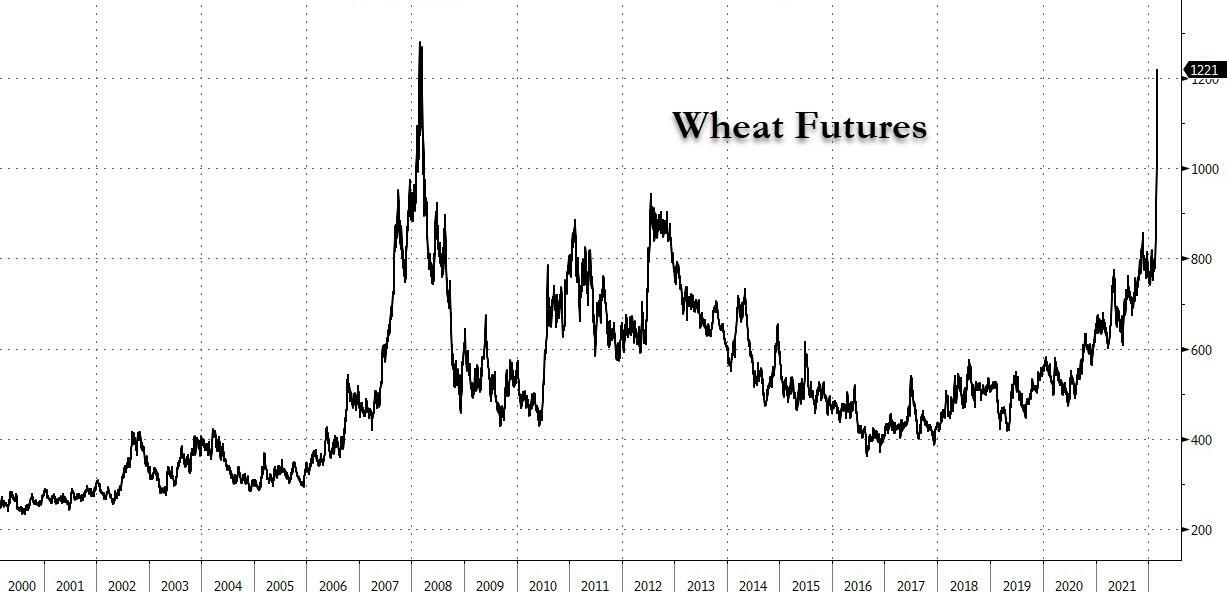
Expect
wheat prices, already at record highs, to promptly double from here in
the next few weeks as the world exists in a permanent state of near crisis realizes the extent of the global food
crisis that is coming.
Much of the world, particularly the poorer regions exist in a permanent state of near famine with the balance of supply and demand for food always on a knife edge and the conflict between Ukraine and Russia will push the world's hunger crisis closer to catastrophe. The two countries are major producers of wheat, - and Ukraine has traditionally been known as Europe's bread basket. They are also two of the world's major exporters of staple wheat and other staples, and a protracted crisis with prolonged interruptions in supply chains will result in higher food prices for everybody and hit the poor, who can leat afford to absorb higher food costs, hardest of all.
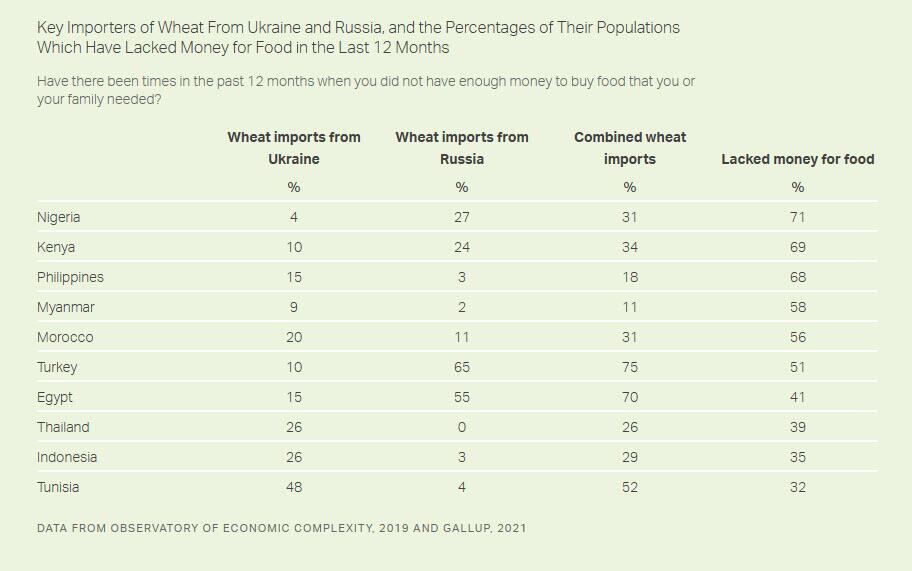
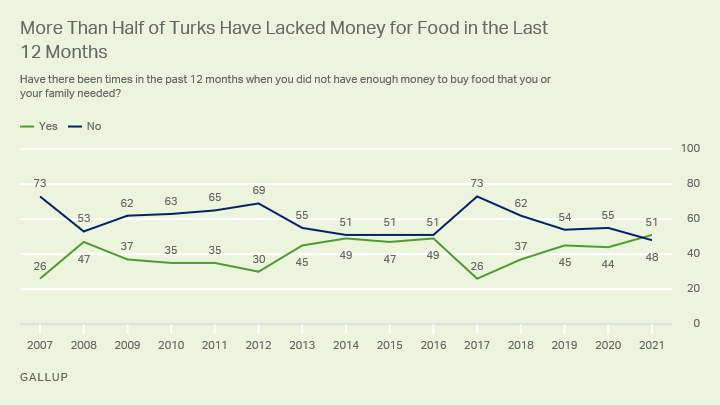
A Gallup data survey offers some
insight into the populations most likely to suffer serious consequences from prolonged
disruption of supplies: People in countries reliant on wheat from Ukraine or Russia,
where large segments of their populations were also struggling to
afford food before the war broke out. Many countries on the list, including Egypt, Turkey and Kenya, are also in the throes of political upheaval with civil conflict having broken out in some. These s ituations can only be made worse if large segments of the populations face starvation.
The first to declare a humanitarian crisis is likely to be Turkey, which imports 75% of its wheat from Russia and Ukraine in a normal year, making it the most
dependent on supplies from those countries. In 2021, a slim majority of
Turks (51%) reported being unable to afford food in the past 12 months.
Turkey's vulnerability is exacerbated by economic crisis and high levels of inflation.
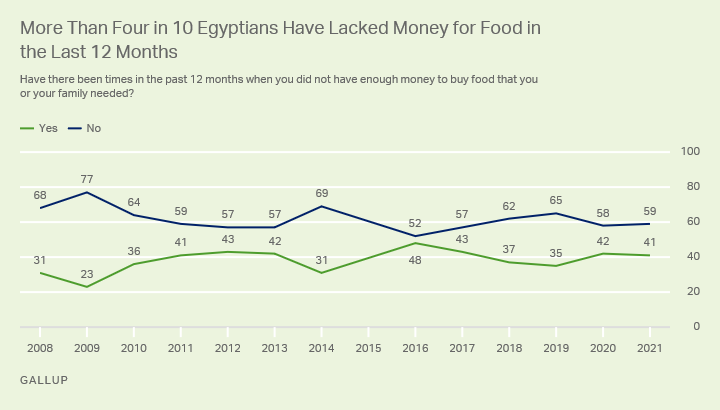
In second place for reliance on grain from Ukraine and Russia is Egypt, which received 70% of the country's grain
imports from those nations in 2019. More than 40% of Egyptians in 2021 reported being too hard up to buy food at some time in the
last 12 months.
Egypt's economy was hit hard by the COVID-19
pandemic, but when final figures are available it could show positive growth for 2020 and 2021. Inflation is high and rising however, and further increases in
food prices will quickly cancel out the small gains the Egyptian economy has made.
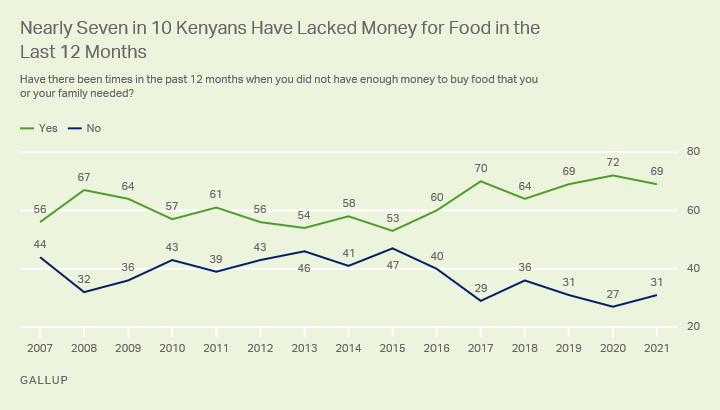
Kenya obtained just over a third of its wheat imports from Russia and Ukraine
in 2019, below the percentages of imports for Turkey and Egypt.
However, nearly seven in 10 Kenyans lacked money for
food in the last year according to Gallup, substantially higher than in Turkey
or Egypt.
It
is unclear how long disruptions in the food supply due to the war in Ukraine will last, though world higher wheat prices around the world have already triggered increases in food prices. For the
developed world, increased prices for wheat will likely cause many to struggle with increases in food prices, but these populations will continue to cope. In the developing world, where populations already struggle to
afford food, they may result in famine and social upheaval.
Disruption
of Ukrainian wheat supplies may prove doubly painful for regions already in food crisis such as The Horn Of Africa and Yemen. Ukraine was the second-largest
supplier of wheat to the United Nation's World Food Programme (WFP) in
2020 and 2021. Unable to procure wheat from Ukraine, WFP will likely
have to purchase the grain from other, more expensive sources and thus
have less aid to provide to those at the greatest risk.
Liberals Scream Everything Is ‘Racist’. Maybe It’s Liberals That Are Racist This blog, considers its stance to be ‘classical liberal’, that is really liberal in its support of fairness, free speech and personal liberty and above all diversity of opinion and ideas and oppose such political sacred cows of the politically correct left as mass immigration and affirmative action ...
Russia's Surprise Withdrawal From Syria? "If We Don't Go Away, We Can't Come back Again.
There is no doubt that the withdrawal is not quite what it seems to be, but more likely a tactical move by the Russians. The Kremlin feels it has done enough to secure the regime of President Assad, the remnants of the Sunni Muslim Free Syrian Army are no longer capable of mounting a challenge and the Syrians, along with Shi'ite militias in Iraq and Kurdish irregulars, backed by Iranian Republic an Guard troops ought to be capable of dealing with ISIS
Pentagon Admits US Ground Troops Involved in Somalia Raid
Pentagon officials confirmed that US ground troops were involved in a raid against a town in Somalia held by fighters of the ISIS afilliated al-Shabaab terror group. The US troops arrived by helicopter to engage the terrorists in a raid which also involved Somali forces, and which they say killed “more than 10? fighters.
USA Extends Drone war To Africa
So why we wonder is the USA taking its drone war against the third world into deepest, sub Sahran Africa? There cannot be any reason for it, the cited aim of neutralising Boko Haram is not valid because boko Haram are not a standing army but a guerilla force that strikes and then melts away into the civilian population.
Have you noticed it has all gone a bit quiet on climate change? After all that screaming and shouting from politicians and scientists it turns out the science was never settled. So now they need to spread fear and panic about something else. Guess what ... Food. We are all going to starve if we do not obey The New World Order. Who says? Statistics say and we all know statistics never lie don't we? A must read for independent minded people.
Russian tanks in Ukraine (Picture: https://conservativeinstitute.org/
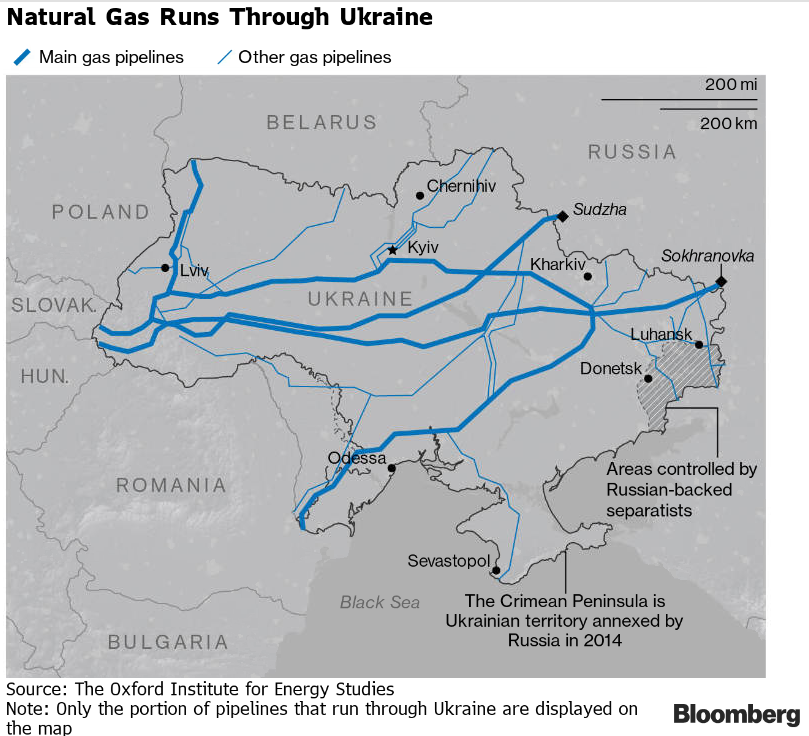
Rumours circulating in the business community suggest Europe may have trouble replenishing its natural gas reserves kept in storage facilities around the continent by next winter as storage levels are at their lowest levels for over a decade. Although sanctions have not yet been applied to prevent EU nations buying oil and gas from Russia, which supplies one-third of Europe's natgas needs, pressure from politicians and media is forcing oil companies and energy generators to shun Russian sources.
On top of this, with Germany having blocked the certification of Nord stream2 pipeline with runs from the Gulf of St. Petersburg, through the Baltic to Germany, much of Europes essemtial suply of natural gas is delivered by pipelines that run through Ukraine. Should the conflict escalate to the point at which Putin decides to up the pressure on EU member states by cutting off the gas, these pipelines will be a natural target.
On Monday (28 February), Russia's biggest energy company Gazprom issued a warning that there will be "serious challenges" in restocking European gas
storage facilities before next winter considering "such significant gas
volumes" are needed. This happened ahead of the summer
months before.
Gazprom said there could be daily restrictions on volumes because
of the technological capacities of the pipeline infrastructure. There's also a risk of damage to pipelines from
Russia through Ukraine. On top of this, Gazprom added, European markets will be
competing with increasing demand from Asian markets.
Bloomberg published data last month showing that underground storage tanks in Germany "are depleted"
by 70.6%, while French ones are 77.1%. Gas withdrawal from European
storage lasts until late March and, in some cases, early April. Gas
injections begin shortly after to resupply the continent for the summer
months and ahead of next winter. However, since storage levels are so low lev els, and the extraordinary circumstance of a regional war in the area between Russia's oil and gas fields and Europe's industrial areas means restocking in preparation for next winter's peak demand could be a problem.
Then there's the risk of Russia cutting off or rationing supplies to Europe in retaliation for the economic sanctions imposed as a punitive measure after the incursion into Ukranian territory and the freezing of Russian central bank assets. The way Russian banks were removed from the SWIFT financial messaging
system, which has caused utter chaos in Russian markets on Monday, especially in FX markets has not helped either. Western political leaderrs should have taken stock of how vulnerable their economies have become to hostile Russian actions before they started throwing their weight about
Commodity markets analyst Kateryna Filippenko told Reuters,
"Europe might have to pull every lever to keep the lights on – reducing
gas burn and cranking up mothballed nuclear and coal plants; maximizing
indigenous gas production and pipeline imports."
All in all it looks like Joe the demented paedo, BoJo the Clown, Little Emmanuel, Justin Turdeau and the rest of the gang have hamstrung their own nations while failing to perturb Russian leaders. Quel surprise, who would have expected such complete incompetence from our ruling elites.
A
fracture on the international right may seem small fry given everything
that is going on right now. But it is worth loitering over. Because in
recent years an interesting divide has grown among conservatives on both
sides of the Atlantic. On one side are the Cold War warriors and their
successors who have continued to view Vladimir Putin’s Russia as a
strategic threat. Meanwhile, a new generation has arrived at a different
view.
While
the West has deranged itself with assaults on its own history, on
biology and much more, an assortment of conservatives have come to see
Putin as some kind of counterweight. A bulwark – even an admirable
corrective – to the madness of our own societies.
As
a guest on Steve Bannon’s talk show recently said: ‘The Russian people
still know which bathroom to use.’ Of course knowing which bathroom to
use isn’t everything. Certainly it is no basis for a foreign policy. But
such shorthand has become commonplace. ... Continue reading >>>